
28
2024
-
09
Electrodialysis Technology: Highly Efficient Solution for Desalination of Circulating Water
Author:
In industrial production and many other fields, the treatment of recycled water is a crucial step, and desalination of recycled water is one of the key tasks. Electrodialysis technology plays an important role in the desalination of recycled water.
I. Principle of Electrodialysis Technology
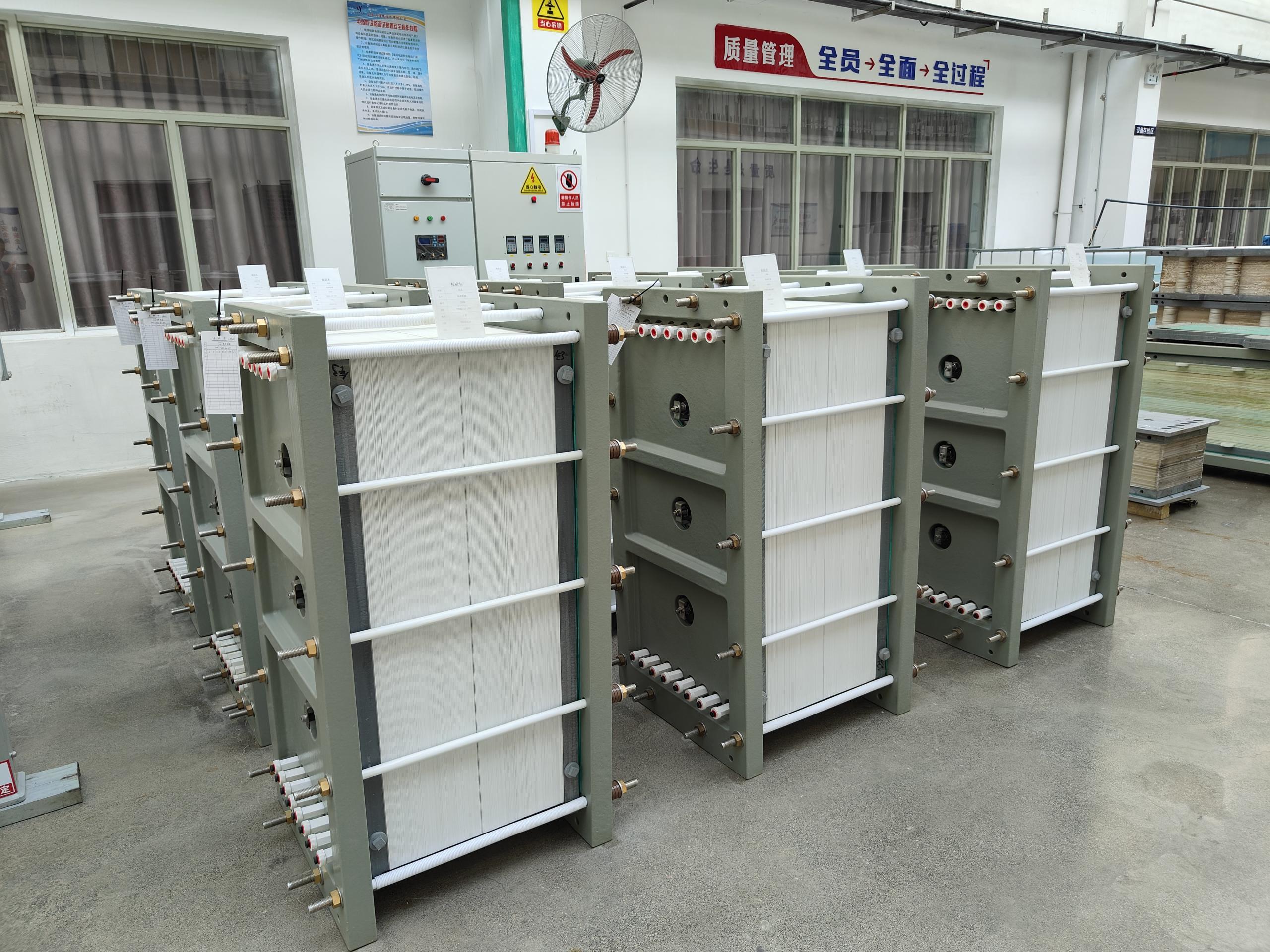
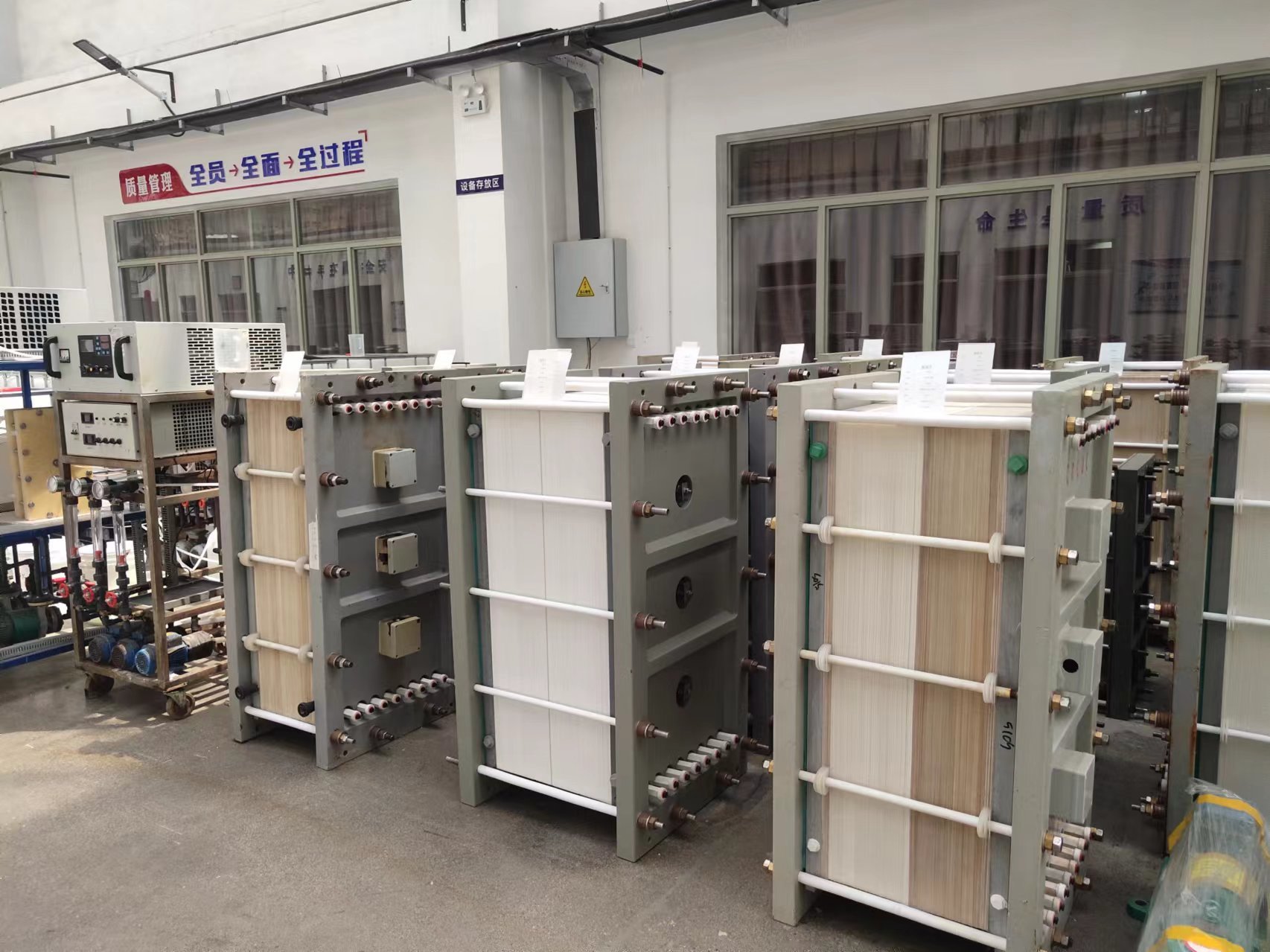
Electrodialysis is a technology that uses ion exchange membranes and electric fields to achieve the directed migration of ions in a solution. In an electrodialysis system, a series of compartments are usually composed of alternating arrangements of cation exchange membranes and anion exchange membranes. When recycled water passes through these compartments, under the action of the electric field, the cations in the water will move towards the cathode direction and pass through the cation exchange membrane into the adjacent compartment. Meanwhile, the anions will move towards the anode direction and pass through the anion exchange membrane into another adjacent compartment. In this way, by continuously migrating and separating, the salt in the recycled water can be removed, thus achieving desalination.
(Two) Advantages of Electrodialysis Technology
(I) High Efficiency Desalination
Electrodialysis technology can effectively remove salt from circulating water, and the desalination rate can be adjusted and optimized according to actual needs. It can lower the salt concentration in circulating water to meet the production process requirements or environmental discharge standards, thus ensuring the normal operation of the circulating water system and water quality.
(II) Significant Energy-saving Features
Compared with some traditional desalination methods, electrodialysis technology has lower energy consumption. During operation, it mainly relies on the electrostatic force to drive ion migration, without the need for large amounts of heat or pressure, thus saving energy costs. In particular, the energy-saving advantage is more obvious when dealing with large-scale circulating water systems, helping to reduce the production costs and operating expenses of enterprises.
(III) Simple and Flexible Operation
The operation of electrodialysis equipment is relatively simple and easy to achieve automation. Operators only need to perform regular inspections and maintenance of the equipment to ensure its normal operation. At the same time, electrodialysis technology can be flexibly adjusted according to changes in the water quality of the circulating water and production needs, such as adjusting the electrode strength and flow rate parameters to adapt to different operating conditions and improve desalination efficiency and equipment operating stability.
(IV) Environmentally Friendly and Non-polluting
Electrodialysis does not require the addition of large amounts of chemicals during the process, so it will not cause secondary pollution. This is of great significance for environmental protection and sustainable development and meets the requirements of modern industry for green production. At the same time, the desalinated circulating water can be reused for production again, achieving the recycling of water resources and reducing the dependence on fresh water resources, further reducing the impact on the environment.
Related Products

Innovation in Organic Acid Production: A Green Closed-Loop Solution Using Bipolar Membrane Electrodialysis
2025-12-11
Electrodialysis: A dual optimal solution for amino acid desalination and nutrient preservation
2025-12-10
Electrodialysis: The Green key to Solving the Dilemma of Kimchi Wastewater
2025-12-09
Electrodialysis technology: The key driving force for the green transformation of electroplating
2025-12-05
Huanke Environmental Protection Technology
HOTLINE:
Address:Optoelectronic Industry Accelerator in Weifang Hi-Tech Zone, Shandong Province, China
Contact:Zhang Gong
WhatsApp:+8619953608211
Email:eco.eqpt@gmail.com
Consult
TikTok
Copyright © 2023 Shandong Huanke Environmental Protection Technology Co., Ltd